Crypto-Agility Strategies: Decoupling Cryptographic Primitives from Payment Logic

- Hardcoding cryptographic algorithms in payment codebases creates severe technical debt and multi-month refactoring cycles during cipher deprecation.
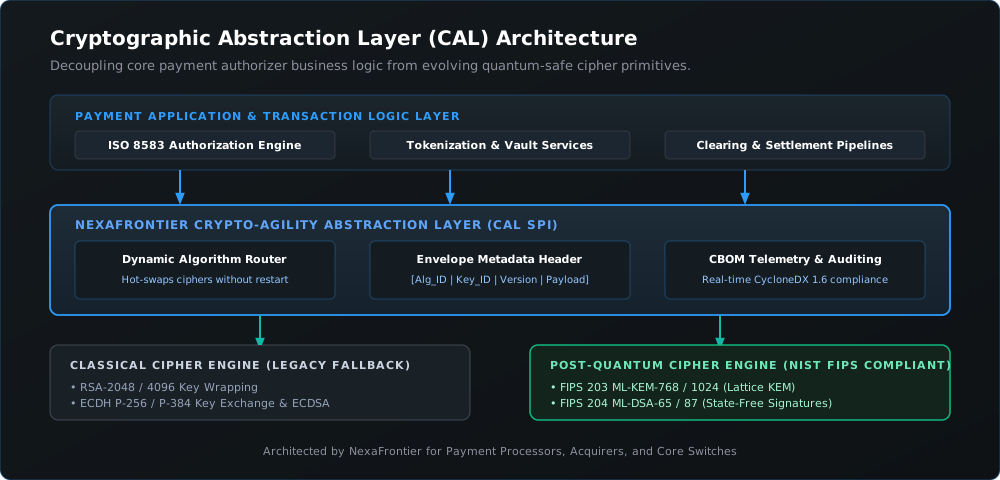
- A Cryptographic Abstraction Layer (CAL) decouples low-level primitives from payment business logic using policy identifiers.
- Envelope encryption with metadata header tagging enables seamless key rotation and multi-cipher coexistence without database schema refactoring.
- Dynamic policy engines allow instant network-wide cipher disabling during emergency vulnerability disclosures.
Why Hardcoded Cryptography is a Technical Debt Trap
In many legacy fintech architectures, cryptographic operations are tightly coupled with business logic. Java codebases directly invoke Cipher.getInstance("RSA/ECB/OAEPWithSHA-256AndMGF1Padding"), database ORM models embed specific AES initialization routines, and API endpoints rely on hardcoded TLS certificate paths.
When NIST releases standard updates (such as FIPS 203, 204, and upcoming stateful hash-based signature revisions) or when a specific algorithm is deprecated, refactoring these distributed codebases requires months of expensive development and high-risk regression testing.
Implementing a Crypto-Agility Abstraction Layer (CAL)
Crypto-agility is the architectural ability to dynamically substitute algorithms, key lengths, and cipher parameters via configuration and policy without altering underlying payment processing code. Core components include:
- Cryptographic Service Interfaces: Abstracting low-level encryption, decryption, signing, and verification into unified interfaces that accept policy identifiers rather than raw algorithm names.
- Envelope Encryption & Metadata Tagging: Prefixing all encrypted database payloads with header tags containing Key IDs, Algorithm IDs, and Version numbers, enabling instant key rotations and multi-cipher coexistence.
- Dynamic Policy Engine: Managing cipher suite allowances centrally, allowing security officers to disable deprecated ciphers across all microservices instantaneously during emergency vulnerability disclosure.
By investing in crypto-agility today, payment enterprises transform future cryptographic upgrades from disruptive multi-year crises into routine, zero-downtime configuration deployments.
Frequently Asked Questions
Crypto-agility is the architectural capability to swap cryptographic algorithms, key lengths, and certificates via central policy and configuration without rewriting core transaction code.
By prefixing encrypted database records with lightweight metadata (Key ID, Algorithm ID, Version), authorizers can decrypt legacy RSA/AES ciphertext while writing new records with post-quantum algorithms.
It converts high-risk multi-year code refactoring projects into routine, zero-downtime configuration deployments.
Subscribe for Technical Briefings & PQC Advisories
Stay ahead of NIST FIPS standardizations, PCI DSS v4.0+ mandates, and quantum vulnerability disclosures.
Connect With Our Cryptographic Engineering Team
Discuss PQC migration strategies, HSM key lifecycle hierarchies, or schedule a fixed-scope Cryptographic Discovery Audit for your enterprise payment pipeline.

